
ABBALab Acceleration Program
Our acceleration program supports teams developing IoT hardware and related services for production in appropriate quantities. We provide funding, expertise and equipment during prototyping. Teams share their progress each month; support may continue as results develop. Read our approach to IoT.
Program support
Support is built around three areas: funding, training and mentoring from specialists, and the workspace and equipment needed for prototyping.
Funding
Using company valuations of JPY 30–50 million as a basis, the program described on this site invests approximately JPY 3–10 million during prototyping, and from JPY 5 million during production, up to JPY 100 million in total. Investments involve acquiring shares or similar interests.
Training and mentoring
IoT hardware prototyping requires knowledge of mechanics, electronics and enclosures, as well as business planning, accounting and management. With mentors and partner companies, ABBALab provides classroom sessions, practical training and mentoring to help teams build the expertise needed for prototyping, manufacturing and running a business.
Workspace and equipment
We provide access to design, development and testing equipment, including tools for circuit design, enclosure prototypes and radio-frequency testing. The program described on this site supports hardware startups through DMM.make AKIBA in Akihabara and staff familiar with its equipment.
Who the program is for
The program is intended for startup teams with strong ideas for IoT hardware and some form of an initial prototype.
Teams carry out prototyping toward production, including crowdfunding and marketing activities, and regularly present their progress to the ABBALab community.
Why crowdfunding matters
Understanding how many people want to buy a product is essential to both business development and production in appropriate quantities. Crowdfunding is a useful way to measure this demand. We value it both as a source of production funding and as a means of learning what customers want.
The hardware and services we look for
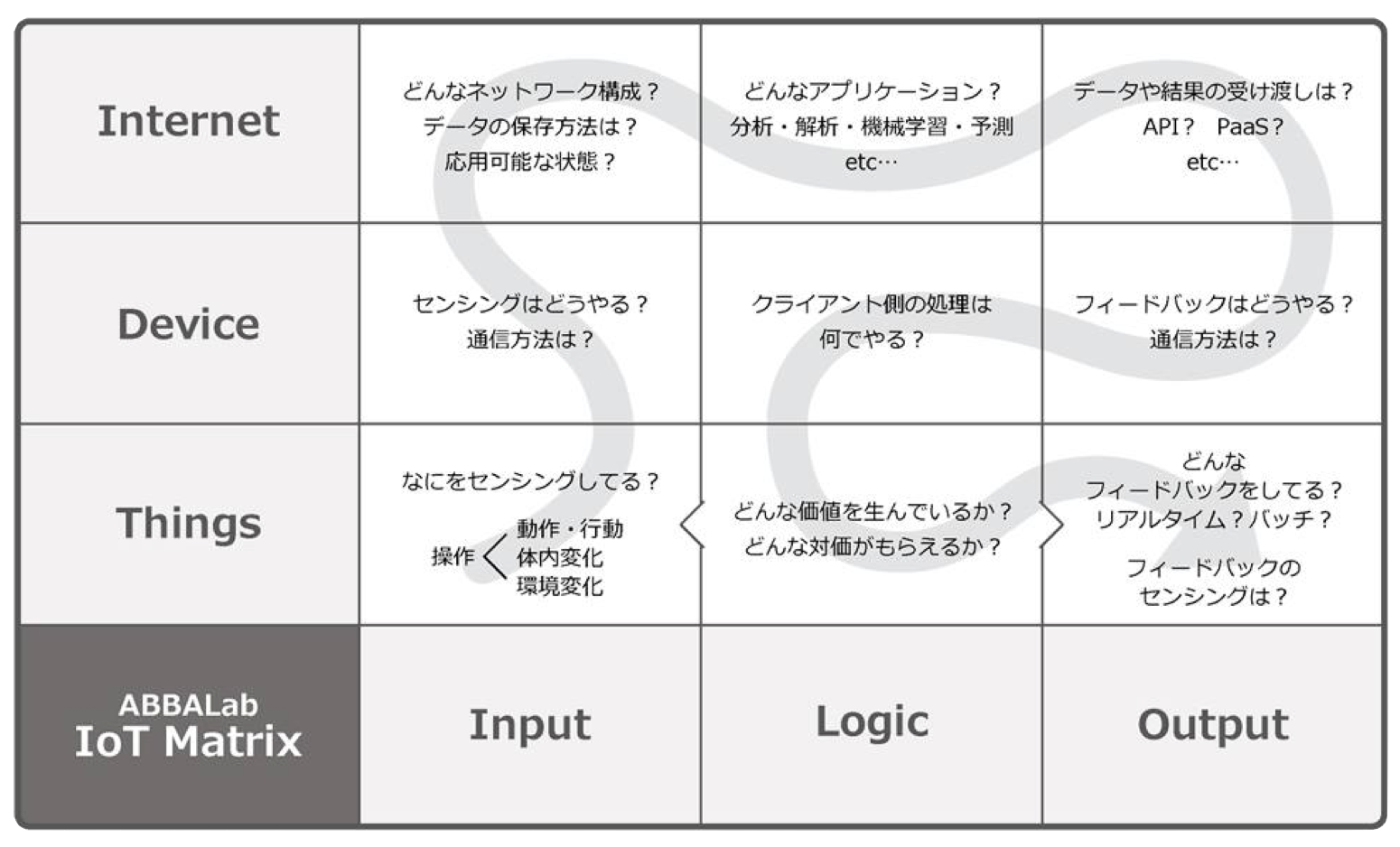
We distinguish devices from the things that happen around them, using Internet / Device / Things as layers and Input / Logic / Output to describe how value moves through a system. Program applications are evaluated on how compellingly a team connects these elements, including the following points.
- Does the idea prioritize sensing actions, behavior, bodily changes or environmental changes over manual operation?
- Is there logic that adds value to the data collected?
- Is the proposed feedback valuable enough for people to pay for?
- Can the team plan and design the devices needed for sensing and feedback?
- Has the team considered appropriate internet connectivity and how data will be stored and used?
Workspace
The workspace described on this site is DMM.make AKIBA, located in the Fujisoft Akihabara Building, a two-minute walk from Akihabara Station. It combines a Studio area with machines and computers for 3D CAD and circuit design, and a Base area with shared offices and presentation spaces.
Studio
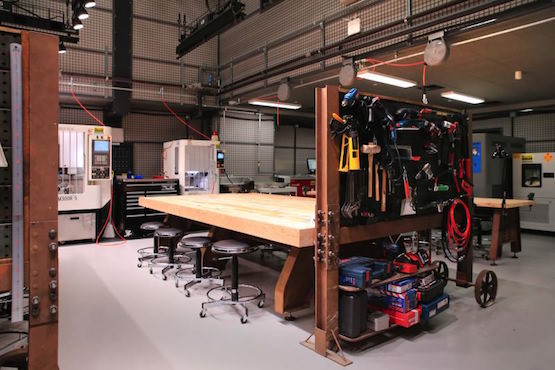
The Studio provides machines and computers equipped with design software. Representative equipment is listed below.
- 3-axis machining centers
- 5-axis machining centers
- CAD software
- CAE software
- CAM software
- 3D printers
- 3D scanners
- Laser cutters
- Cutting machines
- Chip mounters
- X-ray inspection equipment
- Rework machines
- Packaging vibration testers
- Water-resistance testing equipment
- Load testing equipment
- Anechoic chambers
- Spectrum analyzers
- Drill presses
- Lathes and band saws
- Milling machines
- Sandblasting equipment
- UV printers
- Vacuum casting equipment
- Plating equipment
- Sewing machines
- Digital plate-making equipment
- Silk-screen printing equipment
Base
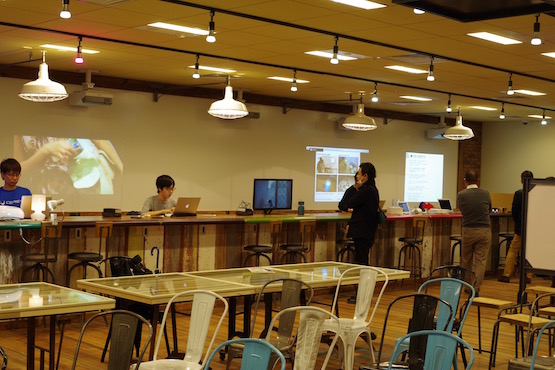
The Base area includes private shared offices and open workspaces. Supported startups can use these spaces for work, meetings and presentation events.